
For millions of people, the day doesn’t really begin until that first sip of coffee or tea hits the system. Whether you’re filling a stainless travel mug before the commute or brewing a second cup at the kitchen counter, caffeine is baked into the modern morning ritual. If you’re putting together a coffee-and-tea setup at home, Voghion online shopping has made it easy to find affordable reusable cups, insulated travel mugs, and kitchen essentials that keep the routine running smoothly, without turning a kitchen drawer into a graveyard of mismatched lids.
But convenience aside, caffeine is still a stimulant, and like anything consumed daily, there’s a point where “enough” becomes “too much.” The good news is that for most healthy adults, caffeine can be a safe and even beneficial part of a balanced routine. The key is knowing where the line sits, how the body actually processes caffeine, and which everyday habits, from the size of the mug to the timing of the last cup, quietly push total intake higher than most people realize.
At a Glance
- FDA guidance: up to 400 mg/day is generally safe for most healthy adults (roughly 4–5 cups of coffee).
- Pregnant individuals are commonly advised to cap intake closer to 200 mg/day.
- Caffeine sensitivity varies widely based on genetics, body weight, and medications.
- Warning signs of too much include jitteriness, a racing heart, and disrupted sleep.
- Measuring servings (rather than free-pouring oversized mugs) is the easiest way to stay in control.
How Caffeine Affects Your Body
Caffeine works by blocking adenosine, a chemical that builds up in the brain throughout the day and gradually makes you feel sleepy. By blocking those receptors, caffeine keeps you feeling alert, which is why that morning cup feels like it “wakes you up.” It also triggers a mild release of adrenaline, which is why a strong coffee can leave your heart beating a little faster and your focus a little sharper.
This effect usually peaks 30 to 60 minutes after consumption and can linger for hours, since caffeine has a half-life of roughly five to six hours in most healthy adults. That means half of the caffeine from a 3 p.m. coffee could still be active in the system at 9 p.m., which is one reason so many people struggle to fall asleep after an afternoon pick-me-up.
How Much Is Too Much? What the Guidance Says
The U.S. Food and Drug Administration advises that for most healthy adults, consuming up to 400 milligrams of caffeine a day, roughly the amount in four to five cups of brewed coffee, is not generally associated with harmful effects (see the FDA’s consumer guidance on caffeine). That said, the agency is clear that “too much” varies from person to person, depending on body weight, medications, certain health conditions, and how efficiently the liver breaks caffeine down.
Pregnant individuals, people managing anxiety or heart conditions, and anyone highly sensitive to stimulants are generally advised to stay well below that ceiling, often closer to 200 mg a day. Health authorities also recommend that children and teens avoid concentrated caffeine sources such as energy drinks altogether.
Caffeine Content Comparison Table
Because caffeine hides in more than just coffee, it helps to see how common drinks stack up side by side against the FDA’s 400 mg daily reference point:
| Beverage (typical serving) | Average Caffeine | FDA 400mg Limit Used |
| 8 oz brewed coffee | ~95 mg | ~24% |
| 1 oz espresso shot | ~63 mg | ~16% |
| 8.4 oz energy drink | ~80 mg | ~20% |
| 8 oz black tea | ~47 mg | ~12% |
| 12 oz cola | ~34 mg | ~9% |
| 8 oz decaf coffee | ~3 mg | <1% |
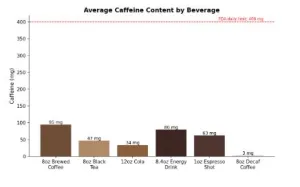
Average caffeine content across common beverages, measured against the FDA’s 400 mg/day reference.
Signs You May Be Overdoing It
The body usually sends warning signals well before caffeine becomes genuinely risky. Common signs include:
- Restlessness or a wired, jittery feeling
- A noticeably faster heart rate or heart palpitations
- Trouble falling or staying asleep, even when tired
- Headaches once the caffeine wears off
- Stomach upset or acid reflux
- Increased anxiety or irritability
If several of these show up regularly, it’s worth tracking the actual daily total, including tea, chocolate, soda, and pre-workout supplements, all of which add up quietly.
Building a Smarter, Balanced Caffeine Routine
Most caffeine overconsumption isn’t intentional; it’s a side effect of oversized servings and untracked refills. A few simple habits make a real difference:
- Measure, don’t eyeball. A standard 8-ounce mug holds far less than the 16–20 ounce tumblers many people now use.
- Use a dedicated travel mug so the amount consumed on the go is known, instead of topping off a bottomless cup.
- Stop caffeine by early afternoon to protect sleep quality, given its multi-hour half-life.
- Hydrate alongside caffeine, since it has a mild diuretic effect, by keeping a reusable water bottle within reach.
- Store beans, tea, and supplements in labeled kitchen containers so strength and freshness aren’t a guessing game.
Small, well-organized kitchen tools go a long way toward turning a vague daily habit into a routine that’s actually measured and controlled.
FAQs
How much caffeine is safe per day?
For most healthy adults, up to about 400 mg a day, roughly four to five cups of brewed coffee, is generally considered safe. Individual tolerance still varies.
Can the body build a tolerance to caffeine?
Yes. Regular consumption leads to tolerance over one to two weeks, which is why some people need more caffeine over time to feel the same effect, and why abrupt cutbacks can cause temporary withdrawal headaches.
Does decaf coffee really have zero caffeine?
No. Decaf typically still contains a small amount, usually around 2 to 5 mg per 8-ounce cup, which is generally negligible but worth noting for highly sensitive individuals.
What’s a safe way to cut back?
Taper gradually over one to two weeks rather than stopping abruptly, and replace part of the routine with water or a lower-caffeine option like tea to ease the transition.
Is caffeine in energy drinks different from coffee caffeine?
Chemically it’s the same compound, but energy drinks often combine it with sugar and other stimulants, which can amplify jitteriness and make total intake easier to underestimate.
Disclaimer
This article is for general informational and educational purposes only and does not constitute medical advice. Always consult a qualified healthcare provider before making changes to caffeine intake or diet, particularly during pregnancy, nursing, or when managing a medical condition.